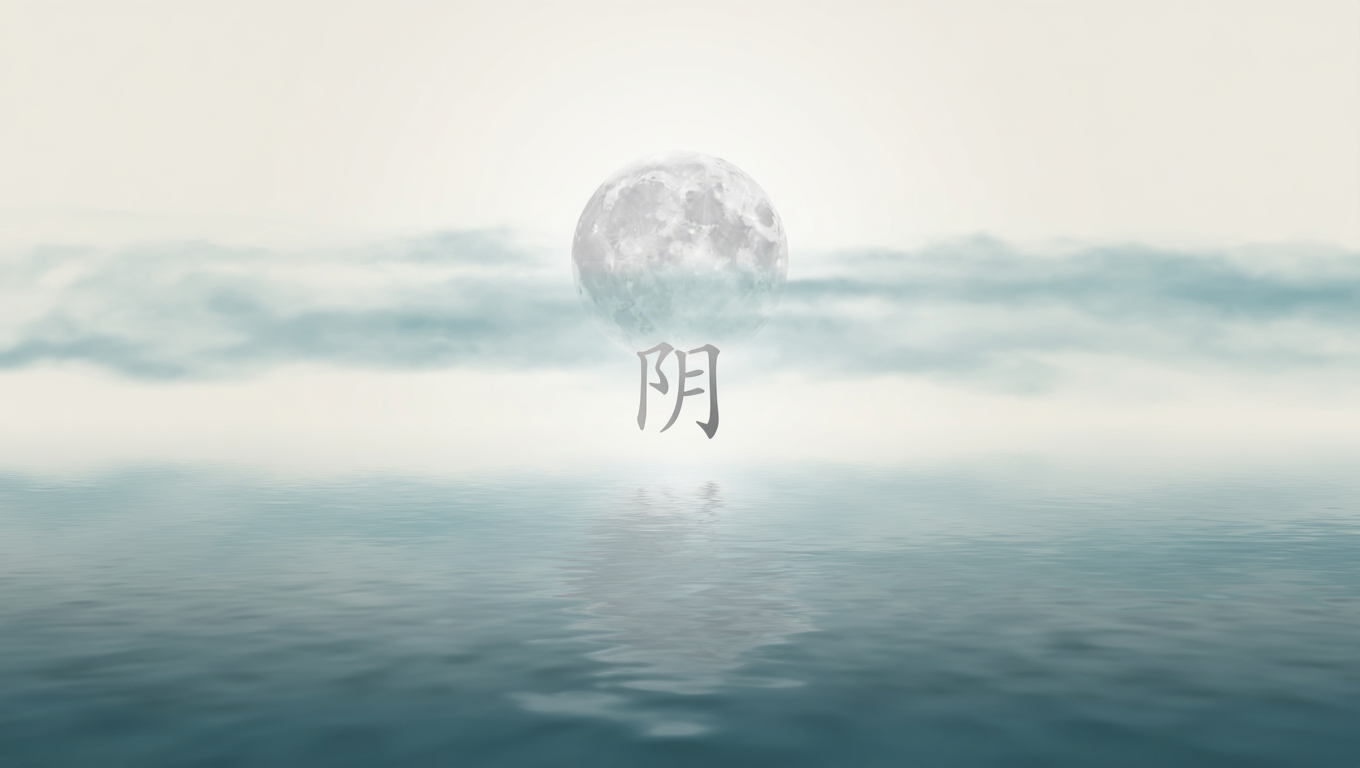
Yin (阴) is the principle of matter, coolness, rest and substance in Traditional Chinese Medicine, representing fluids, tissues, anchoring and the body’s capacity to cool itself and regenerate during sleep.
Yin
阴
- Nourishes the body's fluids and tissues
- Ensures cooling and humidification
- Supports rest, sleep and regeneration
- Anchors Shen and stabilises emotions
- Balances Yang to maintain harmony
Yin is the material, cool and nourishing pole of the universe and the human body. It opposes Yang but is inseparably linked to it in constant dynamic equilibrium.
In Traditional Chinese Medicine
In TCM theory, Yin is the material and substantial aspect of life. It encompasses Blood, organic fluids, tissues, solid organs (Zang) and the body’s capacity to cool itself and regenerate. Yin is intrinsically linked to Yang: without Yin, Yang escapes and becomes depleted; without Yang, Yin stagnates and cools.
The Kidney stores fundamental Yin (Kidney Yin) which nourishes all other organs. The Liver stores Blood, an essential form of Yin. The Heart houses Shen, which depends on sufficient Yin to remain anchored. The Spleen produces Yin from food and beverages.
Practical Applications
In Chinese dietary therapy, Yin is nourished by foods of cool or cold nature, sweet or slightly bitter flavour, rich in fluids and nutrients. Foods that nourish Yin include tofu, black beans, sesame seeds, pears, mushrooms, seaweed and clear soups.
Cooking method directly influences Yin: gentle stewing, long soups and moderately raw foods preserve fluids. Deep-frying, excessive grilling and very hot spices consume Yin.
Concrete Examples
A patient presenting with Yin Deficiency may experience hot flushes in the evening, intense nights, dry mouth, dehydrated skin, insomnia with nocturnal agitation and a tendency towards palpitations. The dietary protocol will include Yin-nourishing foods such as black bean porridge, cooked pears, rehydrated mushrooms and chrysanthemum infusions.
In Yin Heat patterns (Heat due to Yin Deficiency), internal heat manifests as agitation, red cheeks, night sweats and a red tongue without coating. Cool foods such as cucumber, zucchini, tofu and pear juice can calm this internal heat.
Frequently Asked Questions
What is the difference between Yin and Yang?
Yin represents matter, coolness, rest and anchoring, while Yang represents movement, heat, activity and transformation. They are complementary and inseparable: in the body, Yin nourishes and Yang animates. An imbalance of one necessarily affects the other.
How do I recognise Yin Deficiency?
Classic signs of Yin Deficiency include evening hot flushes, thirst without desire to drink much, dry mouth and throat, dehydrated skin, insomnia with night sweats, agitation, a red tongue without coating and a fine, rapid pulse.
Which foods nourish Yin?
Yin-nourishing foods are generally cool or cold in nature, rich in fluids and quality proteins. Tofu, black and azuki beans, sesame seeds, pears, bananas, mushrooms, seaweed, spinach, lean pork and clear vegetable soups are commonly cited.
Conclusion
Yin constitutes the material and nourishing pole of Traditional Chinese Medicine. Understanding its nature, functions and pathologies enables a better grasp of therapeutic reasoning, food choices and support protocols proposed within the Yin Shi universe.