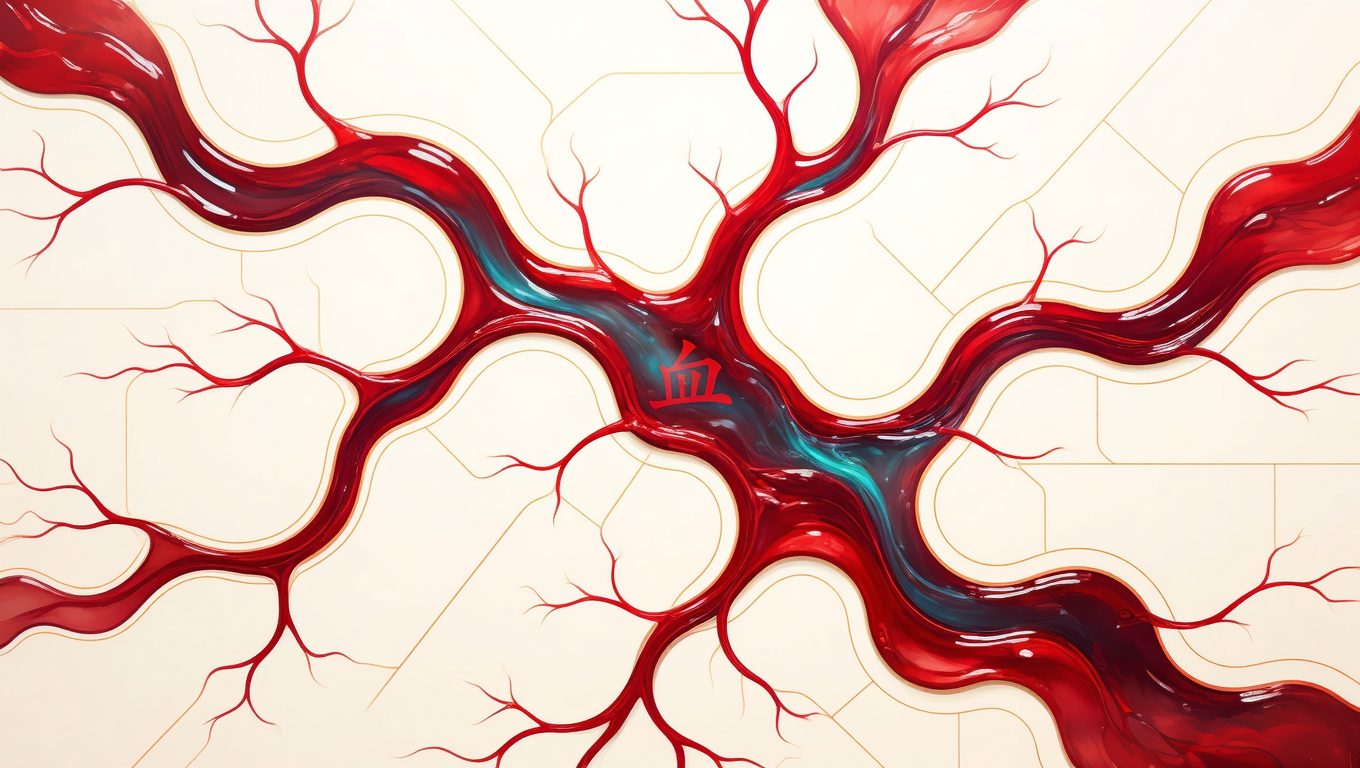
Blood (血 Xuè) in Traditional Chinese Medicine is far more than a simple circulating fluid: it constitutes the essential nourishing substrate that irrigates the organs, anchors the Shen spirit and ensures femininity, fertility and radiance.
Blood
血
- Nourishes and moistens all tissues and organs
- Anchors Shen and stabilises emotions
- Ensures femininity, fertility and menstrual cycles
- Transports Qi and nutrients throughout the body
- Maintains radiance of skin, hair and eyes
Blood is the mother of Qi and the material support of emotional and cognitive life. Its quality and quantity depend directly on digestive transformation and hepatic production.
In Traditional Chinese Medicine
In TCM theory, Blood is produced by the Spleen from transformed food (Food Qi) and by the Kidney from Jing Essence. The Liver plays a central role in storing and regulating Blood, while the Heart governs circulation and the anchoring of Shen in Blood.
Blood Deficiency manifests as pallor, fatigue, dizziness, blurred vision, dry and brittle hair, menstrual cycle disturbances, insomnia and emotional agitation. Blood Stasis translates into fixed pain, masses, a dull complexion, a purplish tongue and scaly skin.
Practical Applications
In Chinese dietary therapy, Blood is nourished by foods of lukewarm or neutral nature, sweet or slightly salty flavour, rich in iron, proteins and quality nutrients. Foods that tonify Blood include dark green leaves, beetroot, dried apricots, dates, liver, beef, azuki beans, black sesame seeds and eggs.
Cooking method directly influences Blood production: gentle stewing preserves nutrients, stews with long bones extract minerals, and hot foods facilitate digestive transformation. Raw, cold or refrigerated foods slow Blood production.
Concrete Examples
A patient presenting with Blood Deficiency may experience persistent fatigue, pallor of complexion and lips, dizziness when standing up, intermittent blurred vision, brittle hair and a diminished or delayed menstrual cycle. The dietary protocol will include Blood-tonifying foods such as azuki bean and jujube porridge, steamed chicken liver, sautéed spinach, dried apricots as snacks and roasted black sesame seeds.
In Blood Stasis patterns, Blood movement is blocked in certain tissues. The patient may experience dysmenorrhoea pain with dark clots, subcutaneous masses, a dull greyish complexion or slow healing. Foods that mobilise Blood such as turmeric, saffron, spinach, beetroot and rose infusions can help restore circulation.
Frequently Asked Questions
What is the difference between TCM Blood and biological blood?
Blood in TCM is a broader functional and energetic concept than biological blood. It includes plasma, nutrients, ocular and cerebrospinal fluids, and even some aspects of grey matter. It is also the support of emotional anchoring (Shen). Biological blood is the physical substrate that partially corresponds to this concept.
How do I recognise Blood Deficiency?
Classic signs of Blood Deficiency include pallor of complexion and lips, fatigue, dizziness, blurred vision, dry and brittle hair, fragile nails, menstrual cycle disturbances (decreased quantity, pale colour), insomnia and emotional agitation. The tongue is pale and barely coated.
Which foods tonify Blood?
Blood-tonifying foods are generally lukewarm or neutral in nature, rich in iron and proteins. Spinach, beetroot, kale leaves, liver, beef, azuki beans, black sesame seeds, jujubes, dates, dried apricots, eggs, mussels and seaweed are commonly cited.
Conclusion
Blood constitutes one of the fundamental pillars of Traditional Chinese Medicine, nourishing the body, anchoring the spirit and ensuring femininity. Understanding its nature, functions and pathologies enables a better grasp of therapeutic reasoning, food choices and support protocols proposed within the Yin Shi universe.